Termination
How to terminate an employee: the conversation step by step
Make the decision before the meeting and say it in the first minute. Give the reason as facts, do not debate, and hand over the next steps in writing. The talk takes about 15 minutes.
 Ruslan KovalenkoCo-founder and CEO, SoftTrainer
In short
- No surprises. The person heard about the problem before, in a written plan with a date.
- Decision first. Say it in the first minute, in one sentence, then the reason as facts.
- No debate. Listen, answer questions about the next steps, and do not reopen the decision.
- Assume it is recorded. Say only what you would sign.
A sales team lead with 8 people has to let one account manager go. The person missed the target for four months and did not meet the goals of a written plan. The team lead has rehearsed a 40-minute explanation and is afraid of every question.
The explanation is the problem. Say the decision in one sentence, then the facts. Termination is the hardest talk in our guide to difficult conversations for managers, and it goes best when it is short.
A termination should never be a surprise
If the person is surprised, the problem started months earlier. Before a termination for performance, the person must know the gap and get a fair chance with a date. That is the job of the performance improvement plan conversation.
Mike Ashie, a leadership coach, opens his list of steps with this rule:
termination should not be a surprise to anyone
Prepare the facts and the paperwork before the meeting
The meeting needs facts on paper, because the decision can be challenged months later. Bring the dates of earlier talks, the written plan and its results. Agree the last day, the final pay and the return of equipment with HR before you start.
In the UK the window for a challenge is now longer. Employment lawyer Nicholas Jones writes in HRZone that the time limit for most tribunal claims doubled:
From October 2026, the time limit for bringing most employment tribunal claims doubled from three to six months.
The same article cites WorkNest research with more than 1,000 employers: 29% misunderstand when unfair dismissal protection begins or are unsure. The rules differ by country, so check the ground and the notice for your jurisdiction with an employment lawyer before the meeting.
Say the decision in the first minute
Open with the decision. Small talk or a review of the past makes a long run-up, and a long run-up makes the person hope, and then the news hurts more. The whole meeting takes 10-15 minutes, in private, with HR in the room or on call.
- Say the decision. "I have asked you here because we are ending your employment. Today is your last working day."
- Give the reason as facts. "The plan of 1 September set 30 qualified meetings a month. The result was 12, 14 and 11."
- Listen, and do not debate. "I understand that you see it differently. The decision is final."
- Give the next steps in writing. The last day, the pay, the benefits, the reference and the return of equipment.
- End with respect. "Thank you for the work on the largest retail account. HR will stay with you for the paperwork."
Talk about the results of the work and leave the character of the person out. Do not say "you are not a good fit" or "it is nothing personal". Both invite an argument.
Assume that the conversation is recorded
Many people would consider recording their termination, so say only what you would put in writing. A recording can reach the team, the press or a court.
LHH asked 3,000 HR leaders and more than 8,000 employees in seven countries about layoffs (April 2026). 87% of the HR leaders have conducted or plan layoffs in the next 12 months. 46% of workers would consider recording their layoff, and 63% of HR leaders worry that layoff talks are recorded or shared.
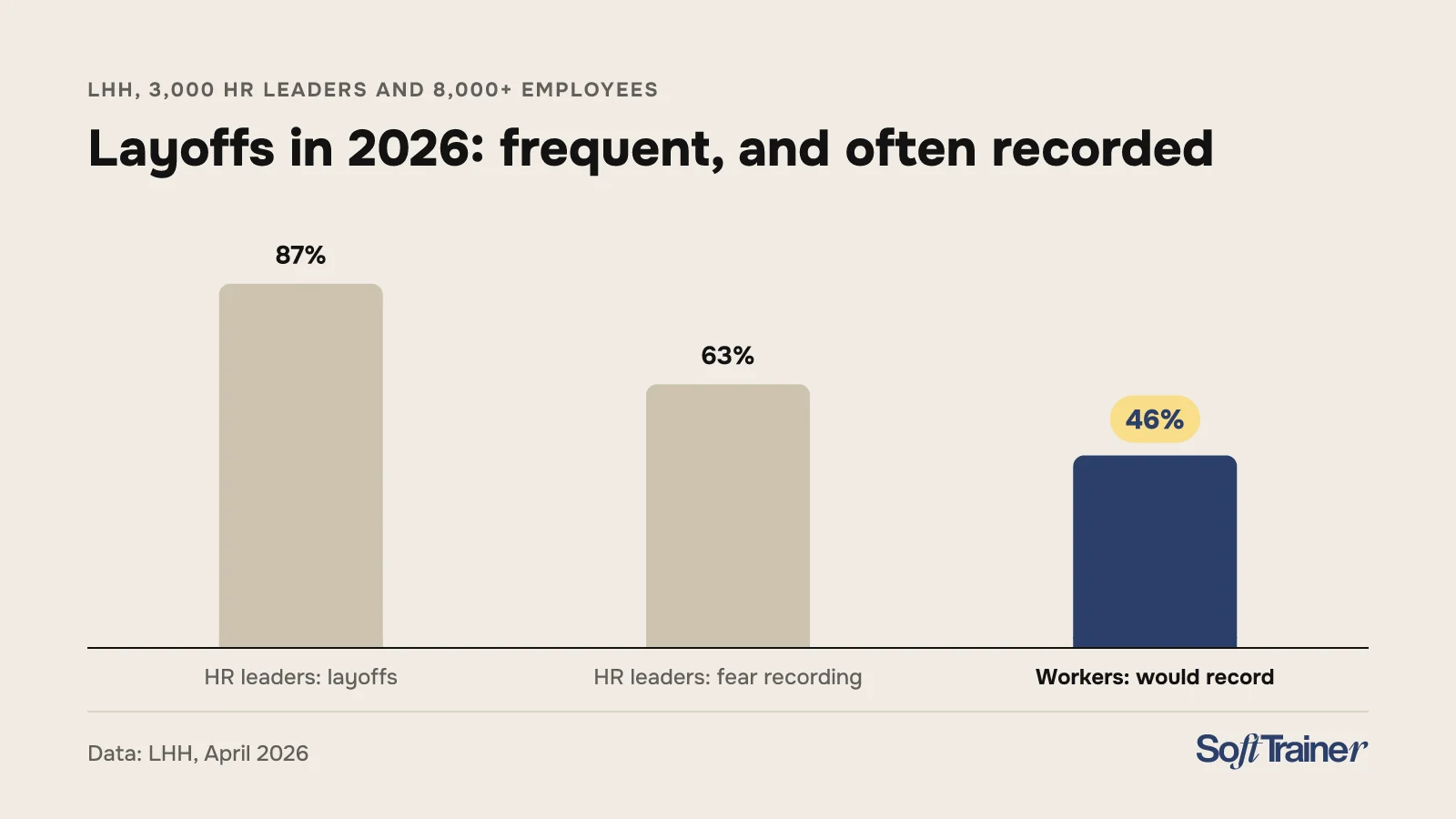
The survey asked about layoffs, but the risk is the same for a termination for performance. A phone on the table records both.
| Instead of | Say |
|---|---|
| "This is hard for me too." | "We are ending your employment today." |
| "You are just not a fit." | "The plan set 30 meetings a month. The result was 12." |
| "Maybe we can find a way." | "The decision is final. Here are the next steps." |
| "It is nothing personal." | "Thank you for the work on the largest retail account." |
The opposite view: wait and give one more chance
The case for waiting is real: a new hire costs months, and the person may still improve. Jones describes the same habit in HRZone: organisations let issues continue in the hope that performance improves.
We agree that a person deserves a fair chance, and the written plan is that chance. Waiting without a plan costs the person months, the team carries the gap, and under the new UK rules the legal risk grows.
How SoftTrainer trains this conversation
In SoftTrainer, a manager practises a hard talk by voice with an AI character in a situation from real work. In one public scenario the manager tells Daniel Mercer, a senior engineer, that he did not get the promotion. The manager must say the decision plainly and agree a path, the same skill as in the first minute of a termination.
The report gives a level for each competency, with evidence from the conversation, and each practice run ends with one next step. You can try a hard conversation by voice.
What to do tomorrow
Write the first two sentences of the meeting on one card: the decision and the facts. Say them aloud three times before the meeting, and show them to HR.
A termination for performance often follows months of feedback that came too late. In our research with 130+ HR and L&D leaders (October 2024 to March 2026), the theme "feedback is too rare and too subjective to change behaviour" came up in about 30% of interviews. If the person is not underperforming but exhausted, the conversation about burnout comes first.
Questions and answers
How do you terminate an employee professionally?
Prepare the facts and the paperwork with HR, then meet in private. Say the decision in the first minute, give the reason as facts and do not debate. Hand over the next steps in writing.
How long should a termination meeting take?
About 10-15 minutes. A longer meeting turns into a debate about the decision. Give the person time for questions about the next steps, and let HR handle the paperwork after the meeting.
Who should be in the termination meeting?
The direct manager, who delivers the decision, and an HR person, who explains pay, benefits and paperwork. Keep it to two people from the company, so that the meeting does not feel like a tribunal.
What should you not say when you terminate an employee?
Do not apologise for the decision, do not say "it is nothing personal" and do not offer a hope that the decision can change. Do not comment on the person’s character. Talk only about the facts and the next steps.
Sources
- Nicholas Jones: The hidden unfair dismissal deadline you can’t afford to ignore (HRZone, 16 November 2026)
- LHH: 87% of HR Leaders Have Conducted or Plan Layoffs in 2026 (Newswire, 21 April 2026)
- Mike Ashie: How to terminate an employee professionally (Leadership with Mike, YouTube, 5 December 2019)
- Кодекс законів про працю України, статті 36, 40, 44, 49-2 (zakon.rada.gov.ua)
- Антон Войтенко: Звільнення працівника: 2 головні помилки керівників і як їх уникнути (YouTube, 26 вересня 2025)
- HR Лайфхак (Telegram): про звіт LHH щодо запису звільнень
- Kovalenko, R., & Rohovynska, K. (2026). The Soft Skills Measurement Gap. Zenodo.